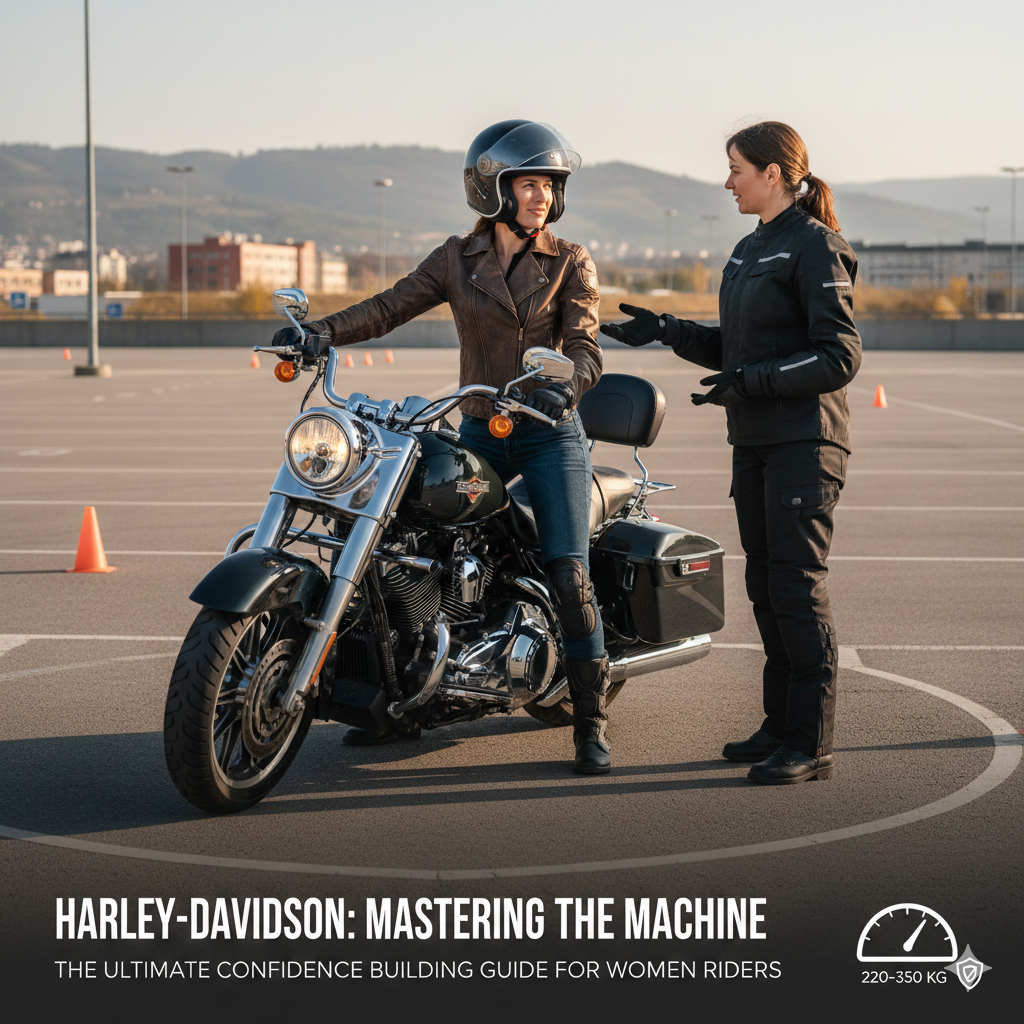
1. Introduction: Why Women Struggle With Heavy Motorcycles
Handling a 220–350 kg motorcycle can feel intimidating—even for men. But for many women, especially in India where average height and strength levels vary widely, the fear can feel overwhelming.
The good news?
Heavy motorcycles are not handled with strength. They are handled with technique, leverage, balance, and calm confidence.
This article will guide you through:
- Mindset shifts
- Small daily practice routines
- Confidence-building tricks
- Real-world handling techniques
- Physics explained in a simple way
By the end, you’ll feel more prepared, empowered, and mentally ready to ride even the heaviest cruisers with complete control.
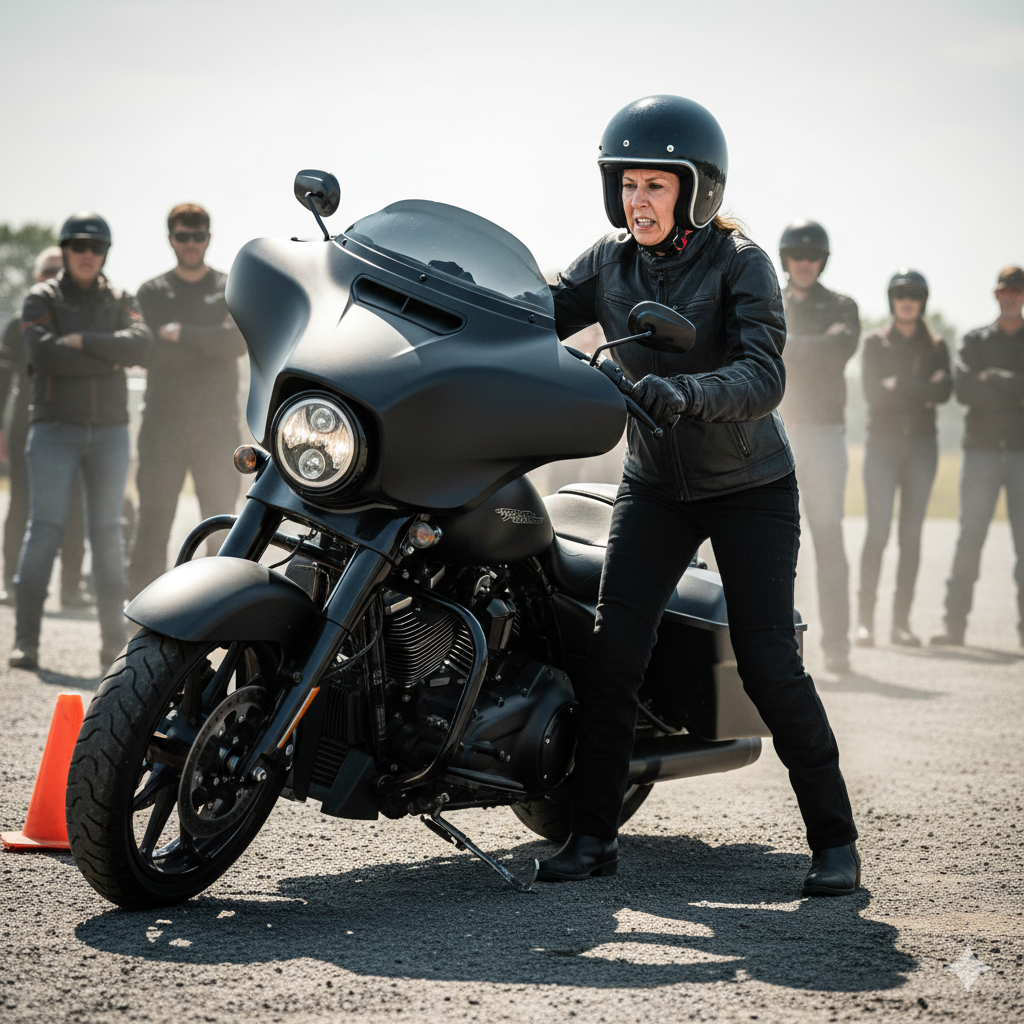
2. Understanding the Fear: What Really Scares Women About 220–350 kg Bikes
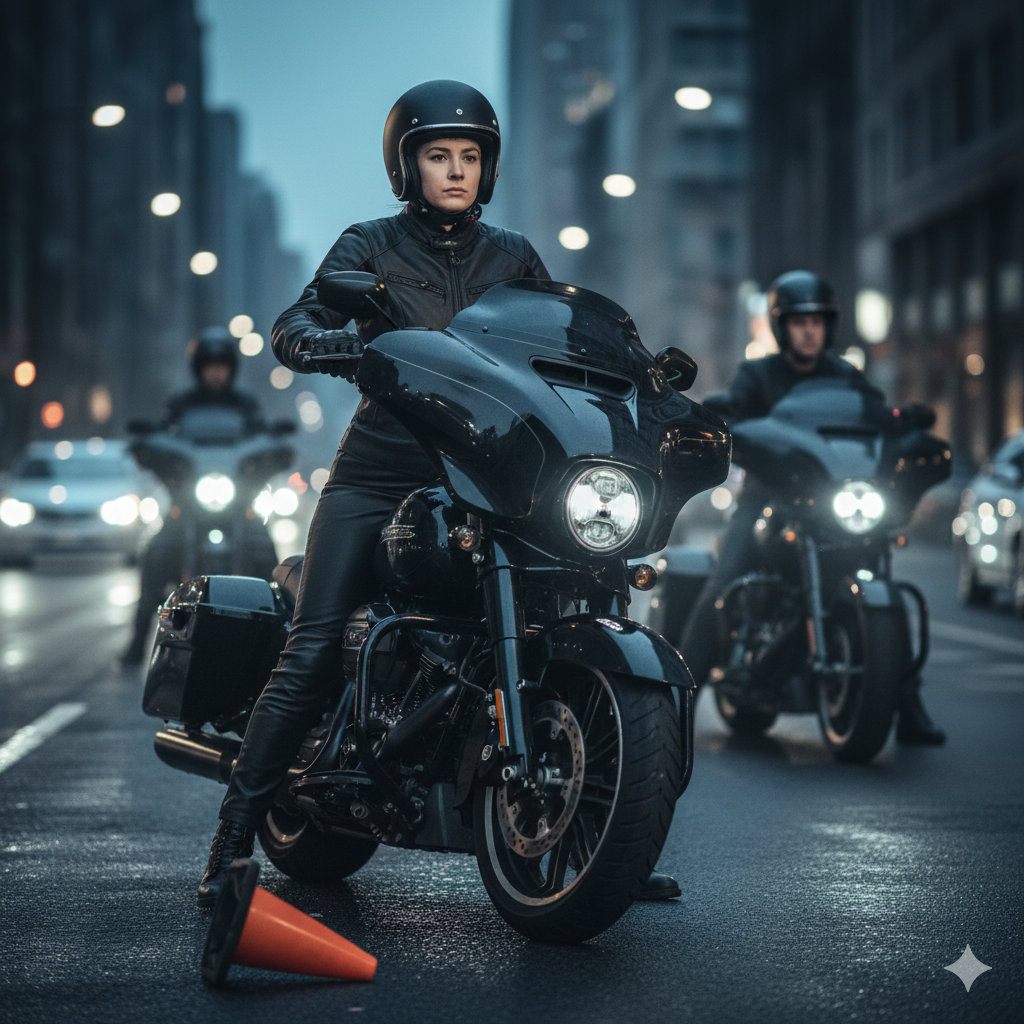
Women riders commonly worry about:
1. Dropping the motorcycle
A natural fear—but dropping a bike happens to everyone. Even professionals.
2. Not being able to lift it up
This fear can freeze your mind, even though techniques exist that make lifting possible for almost anyone.
3. Losing balance at a standstill
Slow speed often feels more stressful than high speed.
4. Getting stuck in traffic on a heavy bike
Crowded Indian roads can amplify anxiety.
5. Not being “strong enough”
Strength is helpful, but unnecessary for safe motorcycle handling.
Once you understand these fears, you can attack them one by one.
3. Mindset Shifts Every Woman Rider Needs
1. Heavy does NOT mean unmanageable
Most 300 kg motorcycles have a low centre of gravity, making them stable and predictable.
2. Strength is NOT the deciding factor
Great motorcycle handling =
✔ Balance
✔ Technique
✔ Calm mind
✔ Practice
3. You don’t need to be tall to handle a heavy bike
Thigh grip, body lean, and foot positioning matter more than height.
4. Confidence grows in layers
Think of confidence like building muscles. Small reps → big results.
5. You are NOT supposed to control the whole bike
You only control balance and direction. The engine moves the weight for you.
4. The Physics Behind Heavy Bikes (Explained Simply)
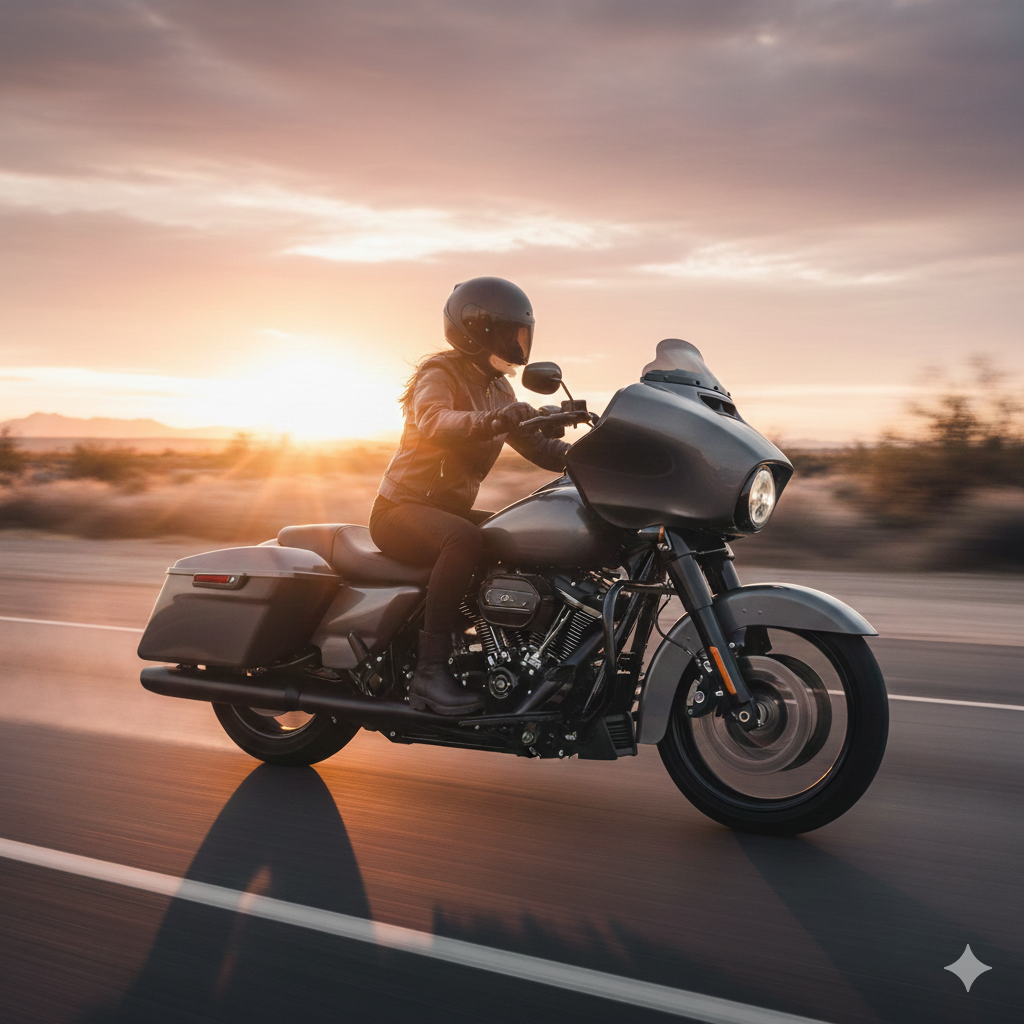
Heavy motorcycles become easier to handle once they’re moving.
Why?
- At slow speed, weight = responsibility
- At speed, momentum = stability
- Low centre of gravity = balance support
- Wider handlebars = better leverage
Think of it like pushing a refrigerator:
Standing still → very heavy
Rolling forward slowly → much easier
Same logic.
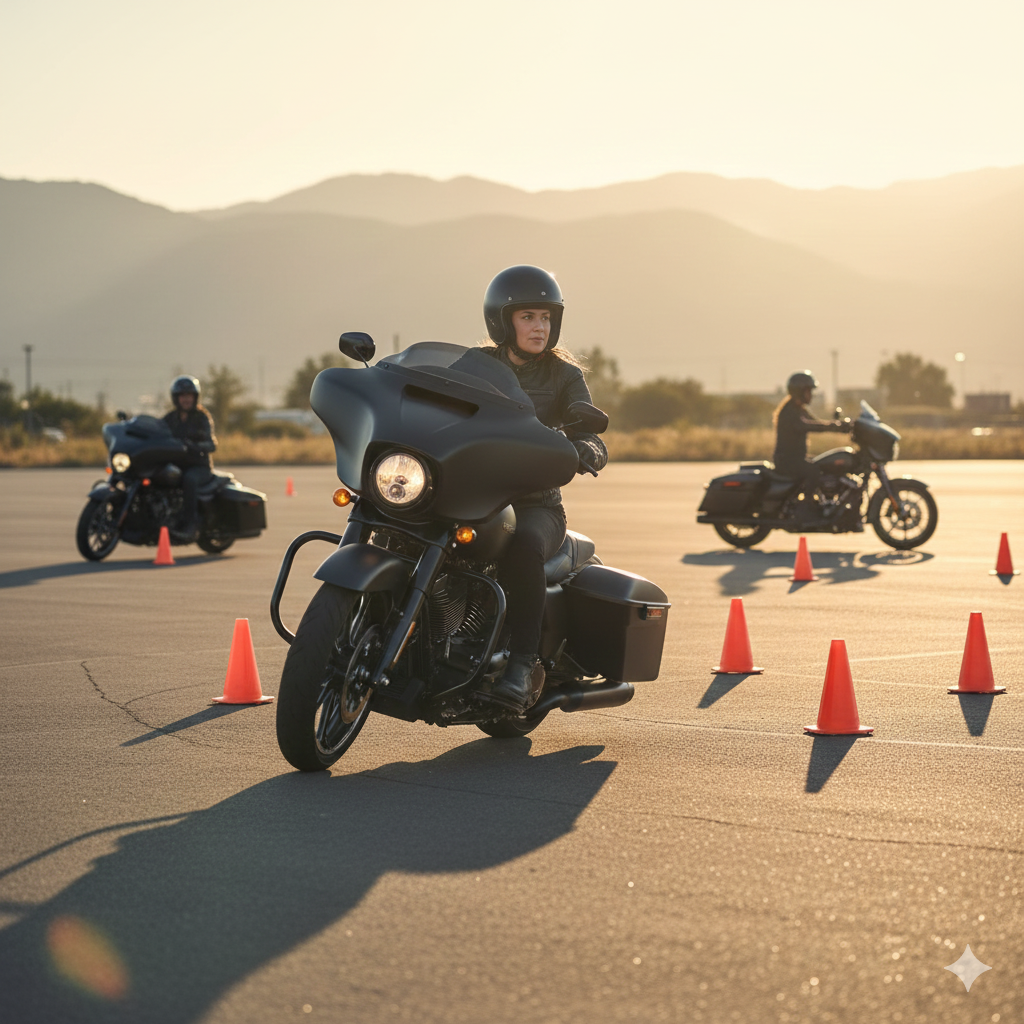
4. Step-by-Step Routine to Build Confidence With Heavy Motorcycles
This is the exact method many riding coaches use.
Step 1: Start With Mental Repetition
Spend 2 minutes imagining yourself:
- Holding the handlebar
- Balancing the bike slowly
- Taking a smooth U-turn
- Putting the bike on its stand
This creates muscle memory before actual practice.
Step 2: Stand Next to the Bike (Don’t Sit Yet)
Practice:
- Feeling the weight
- Rocking it left and right
- Finding the bike’s “neutral balance point”
This alone can erase 30% of your anxiety.
Step 3: Sit and Balance Without Starting the Engine
Try:
- Straight posture
- Keeping the bike vertical with one finger
- Moving handlebars slowly
This proves that balance > strength.
Step 4: Start the Engine and Walk It Slowly
With bike in gear and clutch half-pressed, walk alongside it.
This teaches control without risk.
Step 5: Ride 10 Meters Straight
Very slow. Very controlled.
Use clutch + rear brake.
Step 6: Learn Controlled Stops
Stopping is where most fear shows up.
Practice:
- Stopping without sudden jerks
- One-foot-down stops
- Smooth clutch release
Step 7: Practice Safe Drops
Yes, intentionally.
Lay the bike down on soft grass or mat:
- Learn how it falls
- Learn how to move away from it
- Learn how to lift it (proper back-safe technique)
Once you “demystify” the drop, fear disappears instantly.
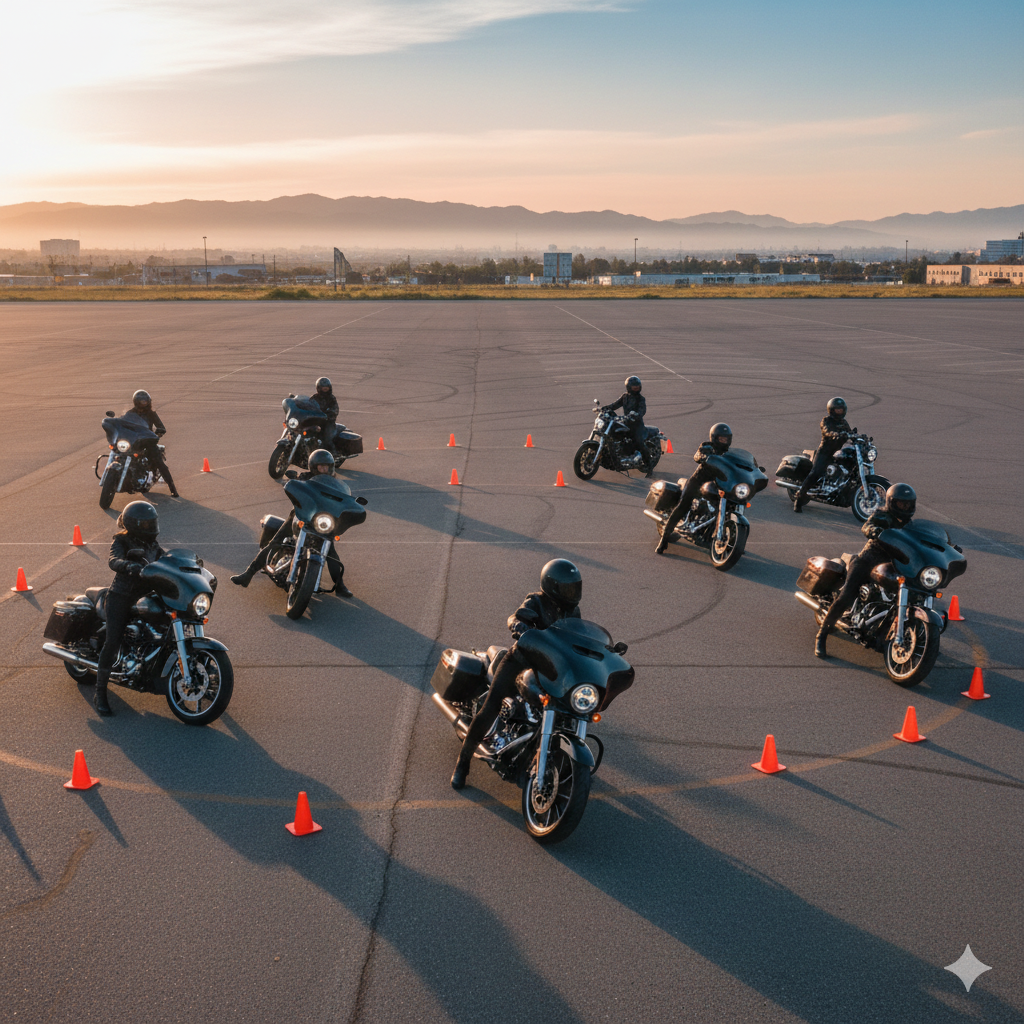
5. 10 Beginner-Friendly Practice Drills for Women Riders
These drills are designed specifically for handling 220–350 kg motorcycles.
1. Rocking the Bike Side-to-Side
Strengthens balance awareness.
2. Friction Zone Control
Master the clutch’s friction zone = zero fear at low speeds.
3. Walking the Motorcycle While Seated
Great for traffic simulation.
4. Tight U-Turn Drills
Use a small circle drawn with chalk.
5. Rear Brake Feathering Practice
Rear brake = stability.
6. One-Foot Stop Technique
Choose left or right based on preference.
7. Figure-8 Practice
Builds deep confidence and balance.
8. Slow-Speed Slalom
Place cones or bottles 2 meters apart.
9. Emergency Brake Practice
Rear + front brake coordination.
10. Heavy Bike Lift Technique
7. Real-Life Scenarios & How to Handle Them
Scenario 1: Bike feels heavy on a slope
- Use rear brake
- Point front wheel uphill
- Keep bike in gear
Scenario 2: Heavy bike in bumper-to-bumper traffic
- Use friction zone
- Use rear brake ONLY
- Avoid full stops when possible
Scenario 3: Parking on uneven roads
- Never park facing downhill
- Use highest ground for right foot
- Roll slightly for balance
Scenario 4: Bike leaning too much at standstill
- Use hips to counterbalance
- Keep arms relaxed
- Don’t fight the bike—guide it
8. Pros & Cons of Riding Heavy Motorcycles

✔ Pros
- Extremely stable on highways
- Lower vibrations
- Exceptional control once moving
- Comfortable for long rides
- Stronger chassis + safer build
✘ Cons
- Harder to push manually
- Requires better technique at low speeds
- Can feel intimidating at first
9. Do & Don’t List for Handling Heavy Bikes Safely

✔ Do
- Practice slow-speed drills
- Keep your shoulders relaxed
- Look where you want to go
- Use body weight, not arms
- Master the rear brake
✘ Don’t
- Don’t fight gravity
- Don’t grab the front brake while turning
- Don’t panic during lean
- Don’t focus on the fuel tank—look ahead
10. Expert Quote
“A 300 kg motorcycle doesn’t require strength. It requires patience, calmness, and understanding how the bike wants to move.”
— Meera Singh, Certified Motorcycle Coach & Touring Expert
11. Comparison Table: Light vs Heavy Motorcycles
| Feature | Lightweight Bikes (150–200 kg) | Heavy Bikes (220–350 kg) |
|---|---|---|
| Stability | Moderate | Very high |
| Highway comfort | Low-moderate | Excellent |
| Low-speed difficulty | Very easy | Moderate |
| Balance | Easy | Requires practice |
| Lean angle confidence | Medium | High |
| Rider fatigue | Moderate | Low |
12. Checklist Before Practicing With Heavy Bikes
- ✔ Wear full riding gear
- ✔ Check tyre pressure
- ✔ Set clutch lever for comfort
- ✔ Ensure empty parking lot
- ✔ Stay hydrated
- ✔ Practice with a friend nearby
13. Safety Tips All Women Riders Should Follow
- Never practice on sloped or sandy surfaces
- Always keep wrists straight while braking
- Keep shoulders relaxed
- Don’t ride when mentally stressed
- Practice in 10–20 minute sessions
14. FAQs (Long-Tail Optimized)
1. How can a woman safely handle a 300 kg motorcycle?
By mastering clutch control, slow-speed drills, and proper balancing techniques.
2. Do women need strength to ride heavy bikes?
No. Riding is about balance and technique, not muscle power.
3. How long does it take for a woman to get comfortable with a heavy motorcycle?
Most riders feel confident within 2–4 weeks of consistent practice.
4. Can a 5-foot woman handle a heavy cruiser?
Yes—using proper stopping, foot placement, and body-weight techniques.
5. What’s the best place to practice handling a heavy bike?
An empty parking lot with flat ground.
6. Does dropping the bike reduce confidence?
Not if you learn how to drop and lift it safely—it actually builds confidence.
7. Why do heavy bikes feel easier once moving?
Because momentum and low centre of gravity stabilise the motorcycle.
15. Conclusion
Handling a 220–350 kg motorcycle as a woman isn’t just possible—it’s empowering. The fear you feel today will become confidence tomorrow if you follow the right techniques and practice consistently.
Remember:
You don’t need strength.
You don’t need height.
You only need technique, patience, and smart practice.