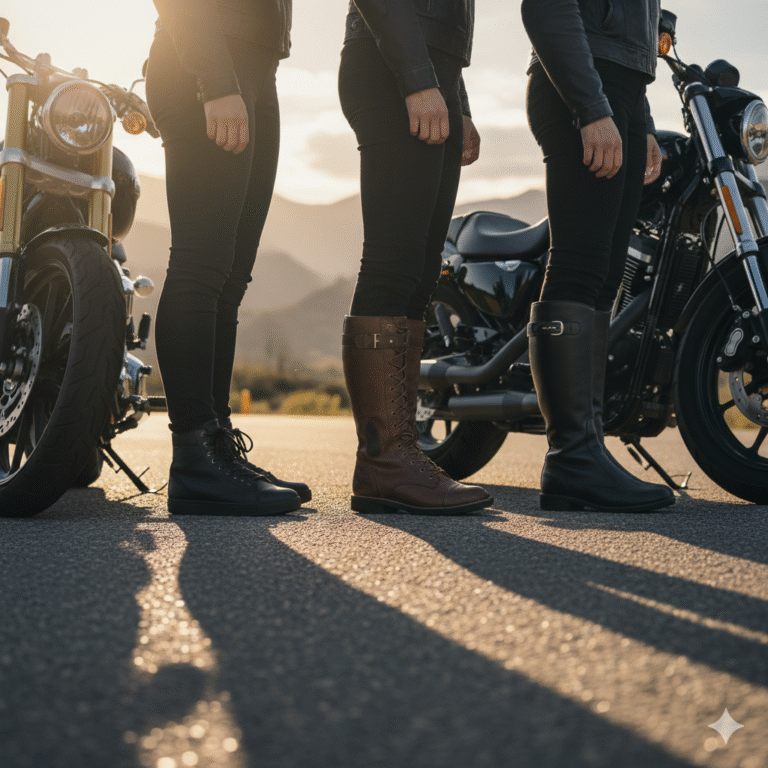
Riding Shoes & Boots for Women: Why Regular Sneakers Are Unsafe
Why Footwear Matters for Women Riders
Riding a motorcycle requires precision, balance, and control, and your feet play a critical role. Poor footwear can:
Reduce grip on footpegs
Increase the risk of slipping on wet surfaces
Provide insufficient protection during emergency stops
Cause ankle injuries in low-speed maneuvers
The Dangers of Wearing Sneakers
Regular sneakers might seem comfortable, but they are not designed for motorcycles. Here’s why:
Weak Sole Grip: Sneakers lack the sticky rubber or reinforced tread needed for footpegs. This can lead to slips when stopping or maneuvering.
Minimal Ankle Support: Heavy motorcycles can easily twist or injure your ankle without the added support boots provide.
Thin Material: Sneakers tear easily on asphalt or if the bike tips over.
No Heel Support: Without proper heel height, your foot can slide off pegs during braking.
Add Your Heading Text Here
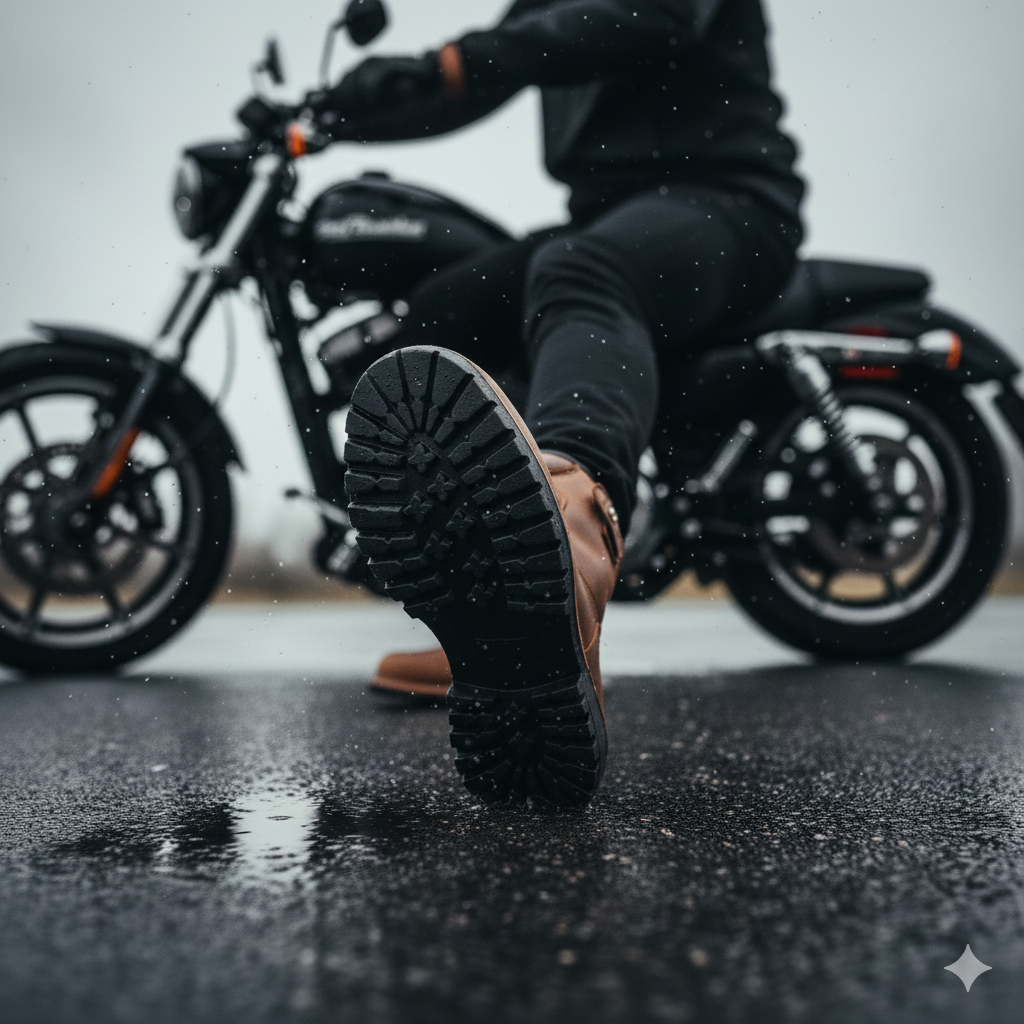
Sole Grip
Look for rubber soles with deep tread patterns.
Non-slip, oil-resistant soles ensure you stay stable on pegs and the ground.
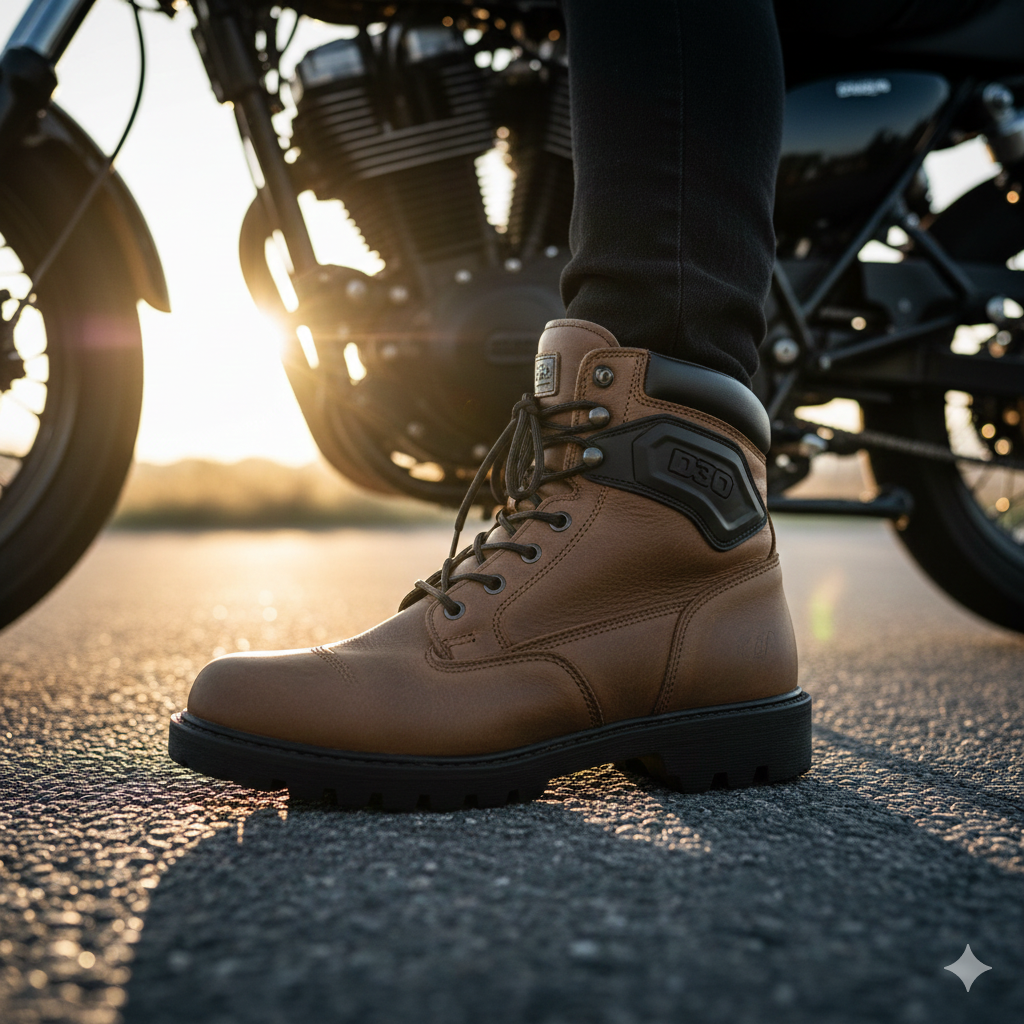
Ankle Protection
Reinforced leather or padded ankle collars reduce the risk of twisting.
Some boots include metal or plastic armor for added safety.
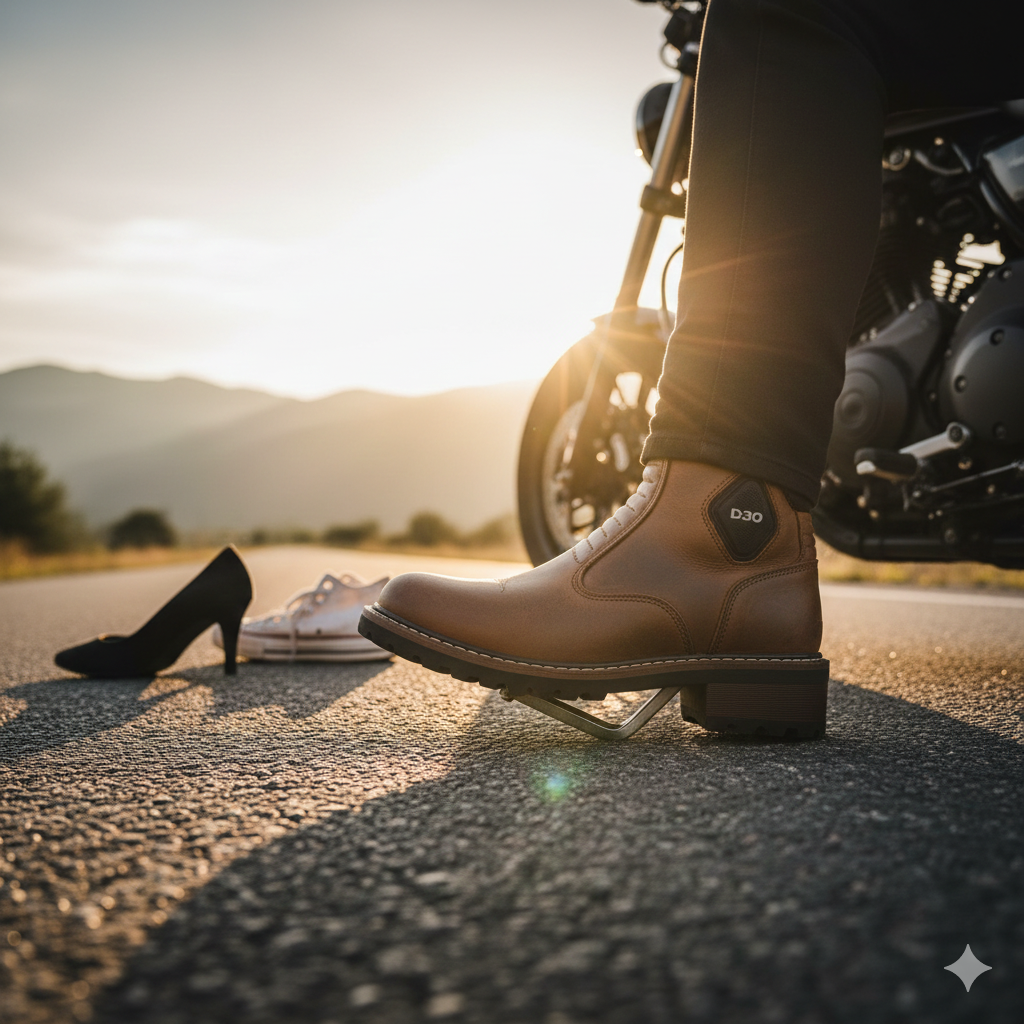
Heel Height
A slight heel (1–2 cm) helps prevent your foot from slipping off the peg.
High heels or flats are unsafe for controlling the bike.
Durability & Material
Full-grain leather or synthetic alternatives resist wear and provide protection against abrasions.
Waterproofing is a bonus for wet-weather riding.
Types of Riding Boots for Women
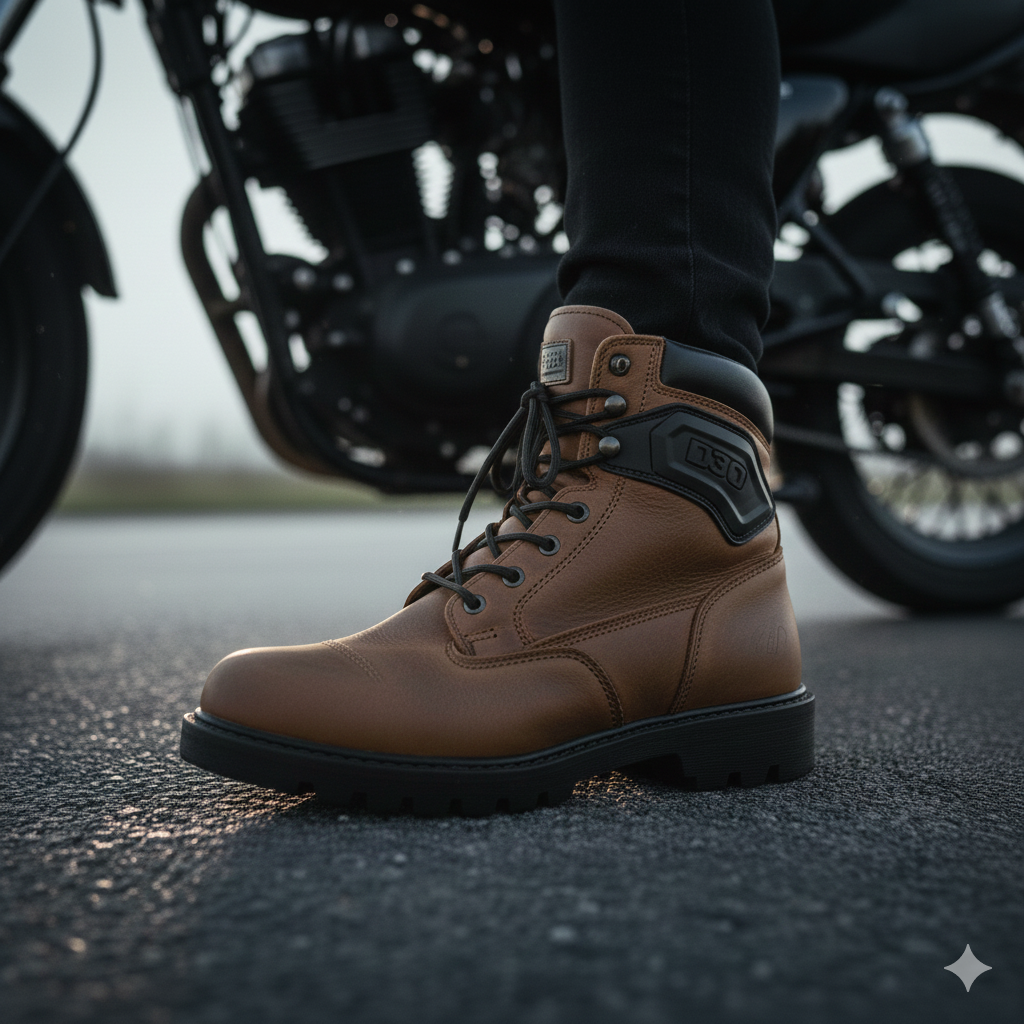
Short Boots
Stylish, lightweight, good for city riding.
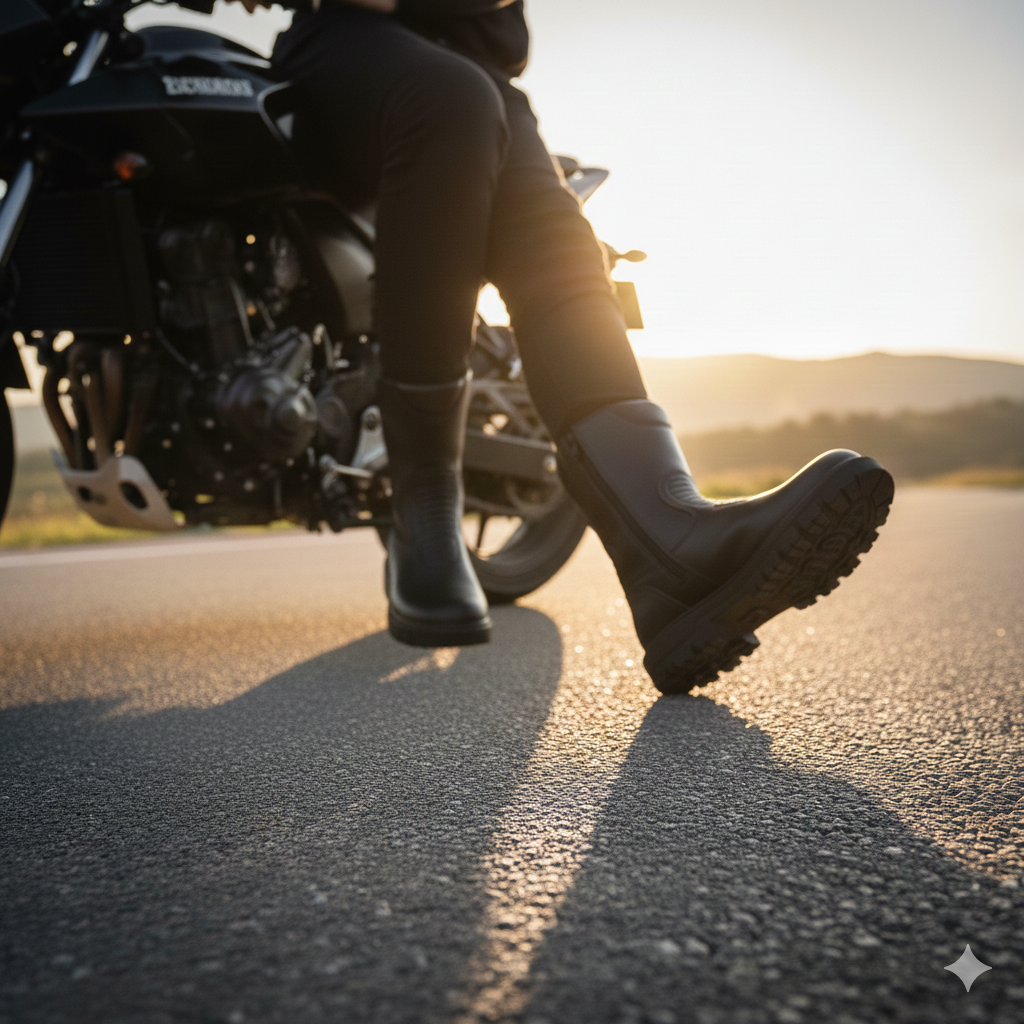
Mid-Calf Boots
Offer better ankle and shin protection.
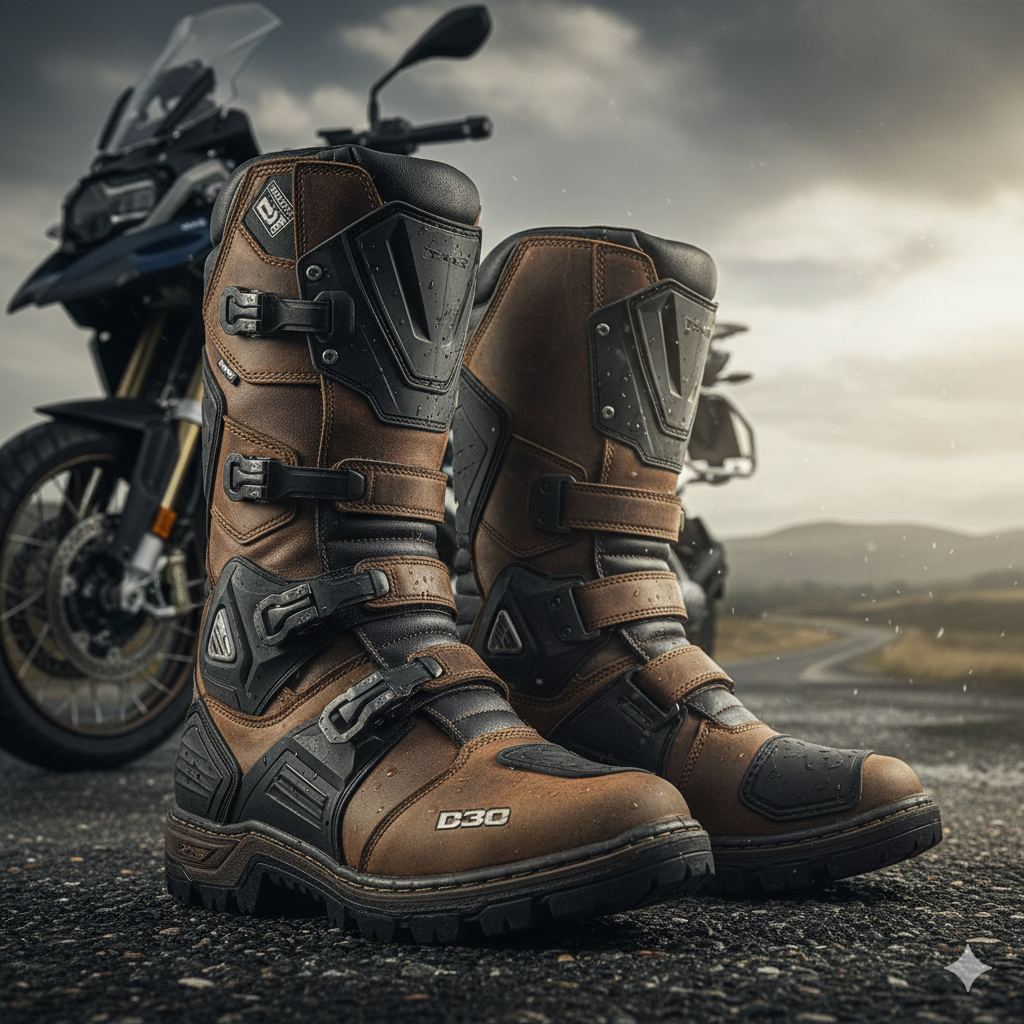
Adventure/Touring Boots
Waterproof, reinforced, best for long-distance rides.
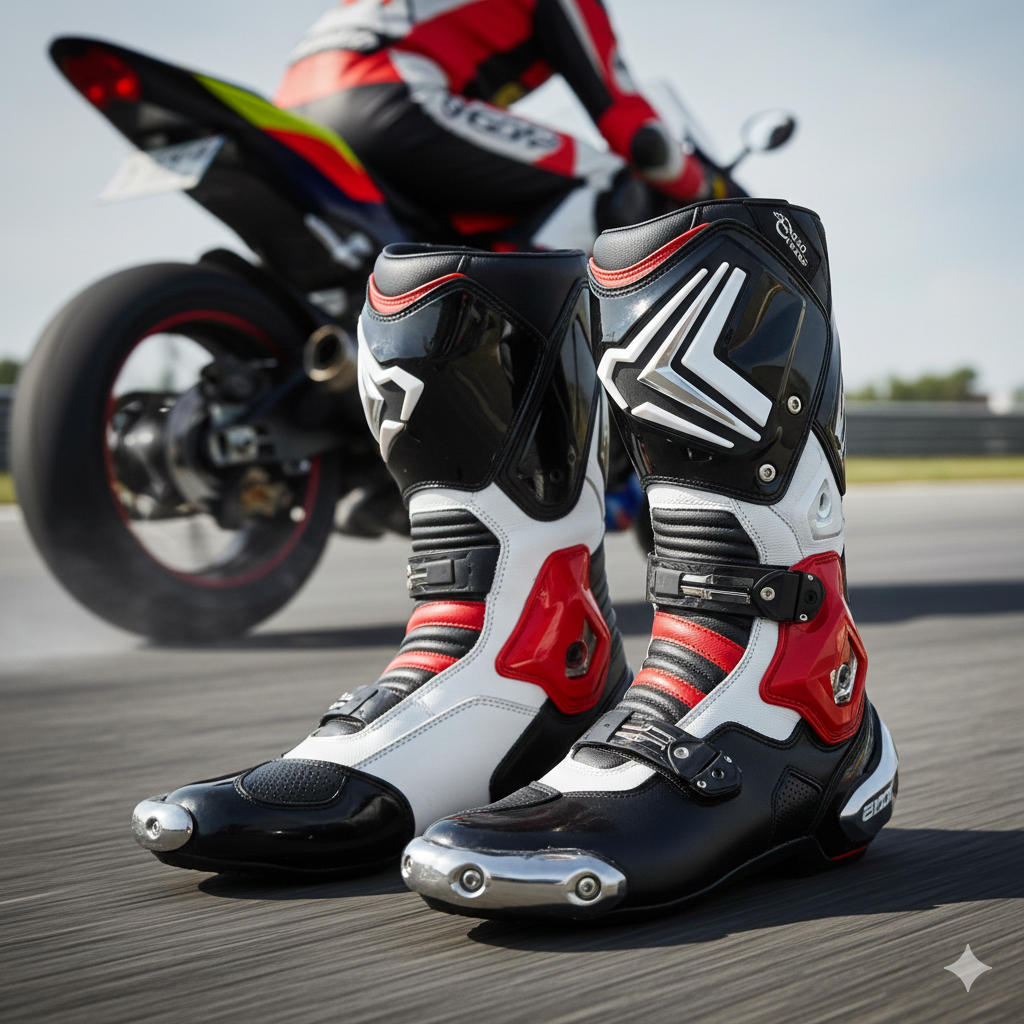
Race Boot
High-performance, maximum protection, designed for track use.
Do’s & Don’ts of Motorcycle Footwear
Do’s
✅ Always wear reinforced riding boots
✅ Check the fit and comfort before purchase
✅ Ensure grip on wet and dry surfaces
✅ Replace worn-out boots promptly
Don’ts
❌ Don’t ride in sneakers or sandals
❌ Don’t compromise protection for style
❌ Don’t wear loose boots that can slide off pegs
Pros & Cons of Riding Boots
Pros
✅ Maximum ankle and foot protection
✅ Better grip and control on pegs
✅ Durable and long-lasting
✅ Comfort for long rides
Cons
❌ Can be expensive
❌ May feel stiff initially
❌ Heavier than regular sneakers
Step-by-Step Guide to Choosing the Right Boots
Measure Your Foot: Make sure boots are snug but not tight.
Check Ankle Support: Move around to test flexibility and protection.
Inspect Sole Grip: Try on both dry and slightly wet surfaces.
Consider Riding Style: City, touring, or off-road determines boot type.
Test for Comfort: Walk around for 10–15 minutes before buying.
Comparison Table: Sneakers vs. Riding Boots
Feature
Sneakers
Riding Boots
Sole Grip
Poor
Excellent
Ankle Support
Minimal
High
Protection
Low
High
Durability
Low
High
Heel
Flat
Slight heel for peg control
FAQs
Can I ride with sneakers if I’m careful?
No. Even low-speed mistakes can injure your feet.
Are short boots safe for highway rides?
Short boots protect ankles moderately; mid-calf or touring boots are safer.
How often should I replace riding boots?
Replace when soles are worn or protective armor is compromised.
Can I find stylish boots for women that are safe?
Yes, many brands combine style with reinforced safety features.
Are waterproof boots necessary?
Recommended for touring or wet-weather rides but optional for short city rides.
Conclusion
Your footwear is your first line of defense on a motorcycle. Never compromise safety for fashion—choose riding boots designed to protect your feet, ankles, and balance. Proper boots not only prevent injuries but also boost confidence and control on every ride.