Why Helmet Selection Is Different for Women Riders
Most helmets in the market are designed using male head data.
Women, however, generally have:
- Slightly narrower jaws
- Different forehead curvature
- Smaller average head circumference
- Longer hair to accommodate
This means a helmet that “fits” can still feel uncomfortable after 20–30 minutes of riding.
A good women-friendly helmet should:
- Sit evenly on the head
- Avoid pressure points on the forehead
- Allow airflow without lifting
- Stay stable without feeling tight

Understanding Women’s Head Shapes
Before selecting a helmet, you need to know your head shape, not just head size.
Common Head Shapes
- Round Oval – Equal width and length
- Intermediate Oval – Slightly longer front to back (most common)
- Long Oval – Noticeably longer front to back
Why This Matters
If your head shape doesn’t match the helmet:
- You’ll feel forehead pain
- Helmet may wobble at speed
- Long rides become exhausting
Helmet Types Explained
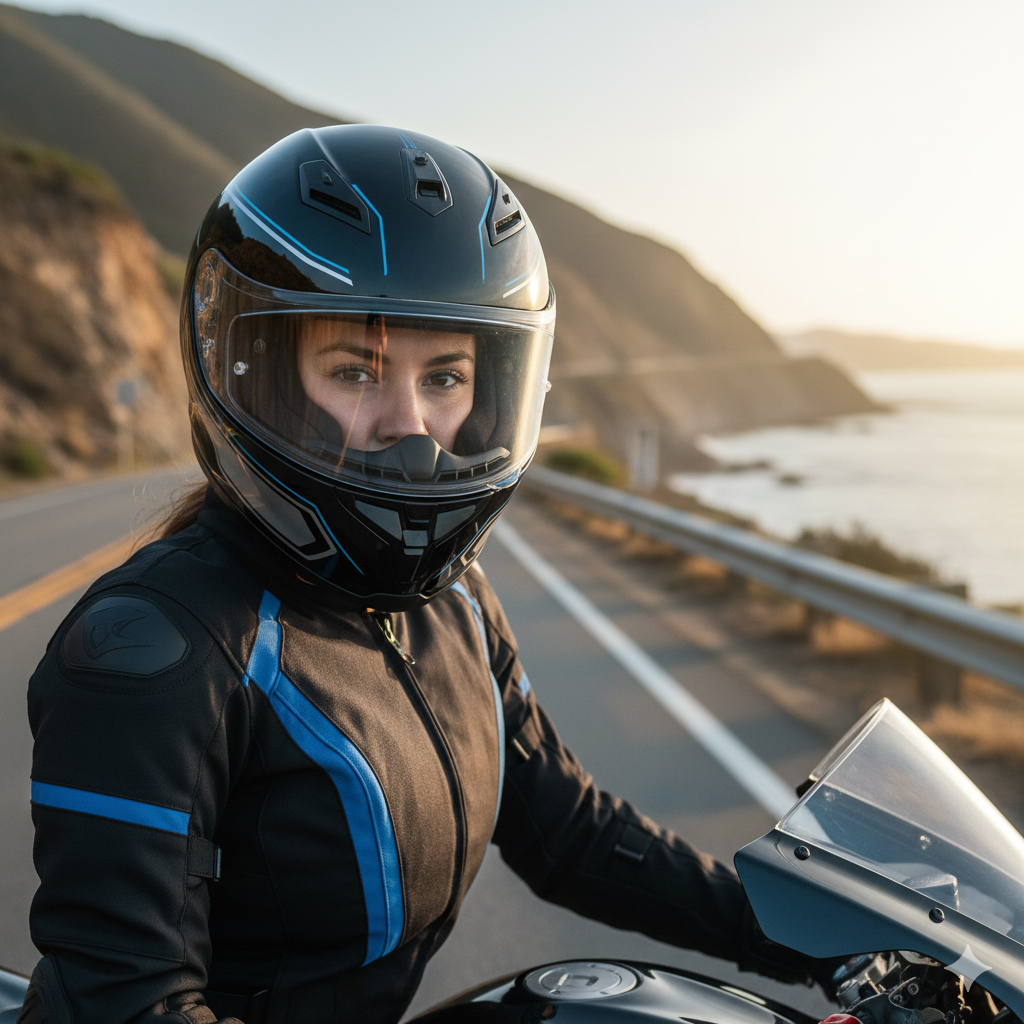
Full-Face Helmets
Best overall choice for women riders
Why:
- Maximum protection
- Better wind noise control
- More stable at highway speeds
Ideal for:
- Daily commuting
- Highway rides
- Touring
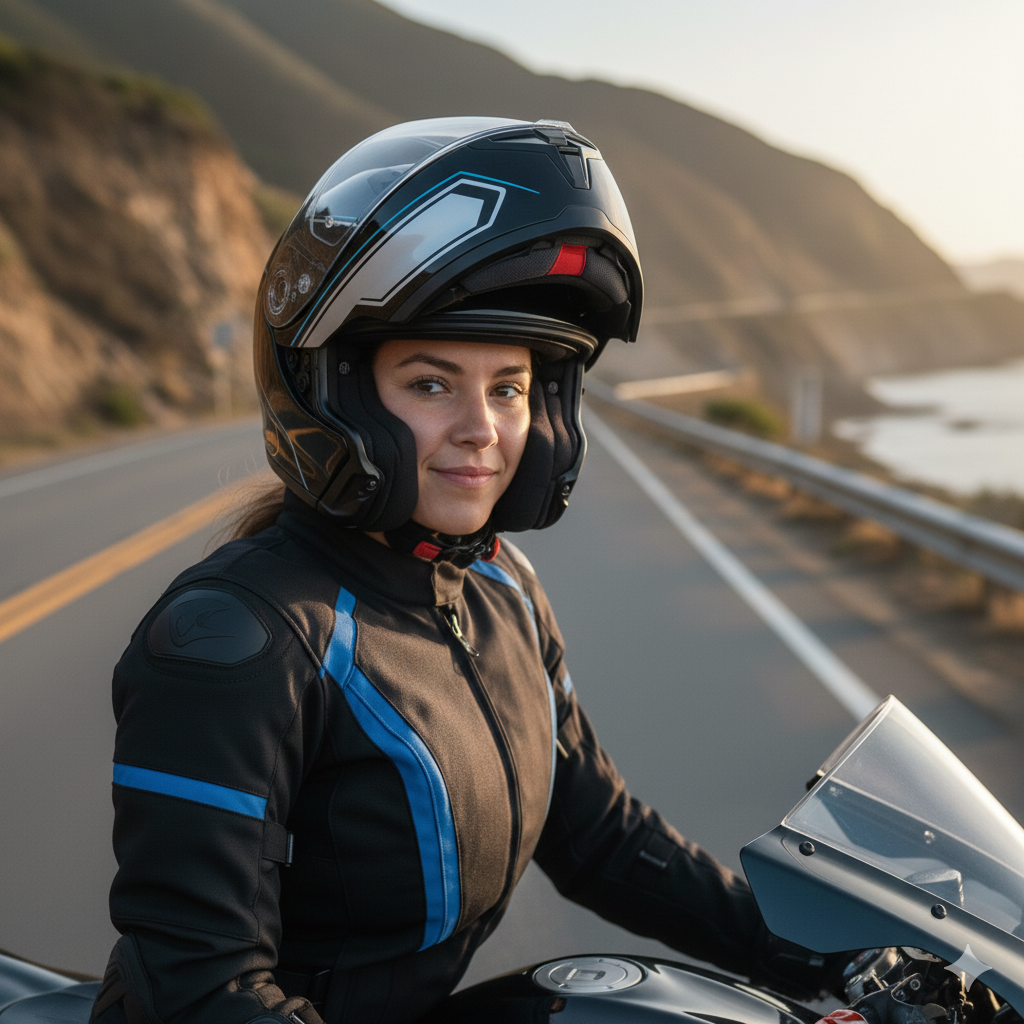
Modular (Flip-Up) Helmets
Convenient but heavier
Why:
- Easy to talk without removing helmet
- Helpful for glasses wearers
Downside:
- Slightly heavier
- More moving parts

Open-Face Helmets
Comfortable but less safe
Why women choose them:
-
Lightweight
-
Better airflow
Downside:
-
No chin protection
-
Unsafe at high speeds
Ideal Helmet Weight for Women
Helmet weight matters more than you think.
Recommended Weight
- 1.2 kg – 1.5 kg → Ideal for women riders
Anything heavier can cause:
- Neck pain
- Shoulder strain
- Faster fatigue
Ventilation: Critical for Indian Weather
Indian riding conditions demand serious ventilation.
- Front air intake vents
- Exhaust vents at the back
- Breath deflectors to reduce fog
Why Ventilation Matters
- Sweat builds up
- Heat exhaustion increases
- Concentration drops
A well-ventilated helmet can make a 45°C ride feel manageable.

Ponytail-Friendly Helmet Designs
One of the biggest issues women face—hair management.
- Rear cut-out or flexible padding
- Space at the nape of the neck
- List Item #3
What to Avoid
- Helmets that press directly on hair knots
- Tight neck rolls with no flexibility

Helmet Fit: Step-by-Step Guide
Measure Your Head
- Use a measuring tape
- Measure just above eyebrows
- Match size chart exactly
Wear the Helmet
- Should feel snug, not painful
- No movement when you shake your head
Pressure Check
- Wear it for 10–15 minutes
- No sharp pain = good fit
Strap Test
Strap should allow only one finger gap
Safety Certifications You Must Check
Minimum Required
ISI (India) – Mandatory
DOT (USA) – Good baseline
Better (If Available)
ECE 22.05 / 22.06 – European standard
SNELL – Race-grade protection
More certifications = more testing = more safety.
Pros & Cons of Helmet Types
Pros
- ✅ Protects head and face
- ✅ Reduces wind fatigue
- ✅ Boosts riding confidence
Cons
Good helmets cost more
Poor fit causes discomfort
Do’s for Women Riders
✅ Choose helmet based on fit, not color
✅ Prioritize ventilation
✅ Replace helmet after a crash
✅ Keep inner liners clean
✅ Use clear visor for night riding
❌ Don’t buy oversized helmets
❌ Don’t ignore pressure points
❌ Don’t choose fashion over safety
❌ Don’t ride with loose straps
Comparison Table: Cheap vs Quality Helmets
| Feature | Cheap Helmet | Quality Helmet |
|---|---|---|
| Fit | Inconsistent | Ergonomic |
| Ventilation | Poor | Excellent |
| Weight | Heavy | Balanced |
| Padding | Hard | Sweat-wicking |
| Safety | Basic | Certified |
FAQs
1. What helmet is best for women riders in India?
A lightweight, full-face helmet with good ventilation and ISI + DOT certification.
2. Are women-specific helmets necessary?
Not mandatory, but helmets with better fit and padding make a big difference.
3. Can women ride with open-face helmets?
Yes, but full-face helmets are safer, especially at higher speeds.
4. How tight should a helmet be?
Snug with no pain or movement.
5. Are ponytail helmets safe?
Lorem ipsum dolor sit amet, consectetur adipiscing elit. Ut elit tellus, luctus nec ullamcorper mattis, pul
Yes, if they don’t compromise helmet structure.
vinar dapibus leo.
6. How long does a helmet last?
About 5 years, or immediately after a crash.
Final Thoughts
A helmet isn’t just gear.
It’s your:
- Confidence booster
- Fatigue reducer
- Life protector
When you choose the right helmet for women riders, every ride becomes:
- Safer
- Longer
- More enjoyable